
Chag Ilanot Sameach!
Tonight begins Tu Bishvat, the ‘birthday of the trees.’ Tu Bishvat, in the days of our ancient ancestors, was when you celebrated a coming arboreal harvest. The trees that were being celebrated had ‘made it through’ the winter, several times in fact. They were counted because our ancestors were confident that soon they would start to bear fruit. With that fruit, of course, came the obligation to bring bikkurim, first fruit offerings, to the Temple in Jerusalem.
It doesn’t necessarily feel like a ‘tree holiday’ here in Canada. When we look outside, we don’t see flowering trees that have survived the harshest rains. We see ice. We see snow. Yet, these seasonal festivals are one of the things which make the Jewish people special and different. Our calendar isn’t set by the land that we live in. Rather, our calendar is set by the seasons of the land of Israel.
Master educator Avrahm Infeld has a story about this clash between the seasons and the Jewish calendar. He writes:
“As a child in South Africa, I remember asking my father to explain why we prayed for rain in the summer. It was December, and in synagogue the prayers included a request for rain, which no child in South Africa wants at that time of year! My father’s answer was very straightforward: “Our rain doesn’t fall in South Africa; it falls in Israel!
Try growing up normal with an answer like that! But being Jewish is not being normal. Being Jewish means living with the knowledge that irrespective of where you actually live, it is only in the land of Israel that the Jewish People are indigenous. With the lesson of the rain my father taught me about the deep connection between the Jewish People and the Land of Israel. As individuals, we can pray for rain in South Africa, or wherever else we may live, but the Jewish People’s collective rain falls in Israel.”
At this time in our people’s history, where one of the great accusations against us that is being leveled again and again is “You don’t belong in the land of Israel. You are settlers. You are a colonialist. You should go back to where you came from.” Tu Bishvat refutes this narrative. Our link to Israel is not something established in 1948, or in 1897, or at any other date in the last few centuries. Our link to the land of Israel is so core to our religious and national identity, that the ancient calendar Jews have used for millennia reflects its time and tides.
So, if this year you looked out the window and thought to yourself. “Tu Bisvhat? Trees? Now? Really?” Remind yourself of this special connection. Even this small festival validates the ancient love we have for our sacred land.
While we remain in the grasp of winter, the red anemone (the national flower of the state of Israel) is blossoming in the south, along the border of Gaza, promising that soon spring- and all its promise of redemption- will come.
With God’s help, so may it be for us as well.
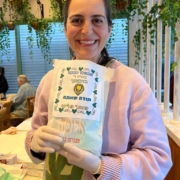
By Sarah Zelcer


I have spent the days and weeks since October 7th vacillating between a state of grief, sadness, fear, anger and helplessness. Like many of us in the Diaspora, I have been glued to the news and social media, neither of which are ideal in terms of supporting my mental health or my ability to hold space for the complexities of the reality of Israel’s trauma and the horrors of war for both Israelis and innocent civilians in Gaza.
I have made a few personal commitments since October 7th. One has been to find and support communities and movements focused on co-existence and recognition of our common humanity. I have found some comfort and hope in building connections with others who believe it is necessary to hold space for diverse and even divergent perspectives in the effort to identify and commit to pathways toward a shared future in the Diaspora and in Israel.
Another personal commitment was to travel to Israel to offer volunteer support. To this end, my sister Shayna and I committed to spending just over two weeks in Israel in early January (our third sister Robin lives in Jerusalem, which we chose as our “home base”). While there are many organized trips and missions one could choose to participate in, we decided to travel on our own and to plug into local volunteer opportunities. We prioritized helping out on Israeli farms, as we were aware that since October 7th, the majority of foreign workers left Israel and farmers are now in a crisis as they attempt to harvest in the midst of a labour crisis. This is exacerbated by the fact that some farmers are also reservists who are serving in Gaza or in the north, as well as by the fact that many farms, particularly in the south, were directly impacted by October 7th. Southern Israel provides roughly 75% of agricultural produce to all of Israel.
On Kibbutz Mivtachim, we harvested cherry tomatoes to support Menachem, a retired farmer whose son, Tal Maman, was murdered defending the kibbutz from terrorists who infiltrated the community on October 7th. Menachem had been retired for the past 7 years as Tal had taken over. Following Tal’s murder, he is now struggling with how to manage his fields while also navigating his own shock, trauma and grief. On our way to this kibbutz, we passed by many kibbutzim- Be’eri, Kfar Aza and others- which we now know were devastated on October 7th and suffered huge losses as well as the abduction of many of their members to Gaza. We passed by the site of the now infamous Nova music festival, driving the very roads which three months prior were littered with bodies and burned-out cars, and passed shelters where festival goers tried to seek refuge.
We harvested pomelos on Kibbutz Mefalsim and heard testimony from a Thai worker who had returned to the Kibbutz to work after October 7th. The worker in question was captured by Hamas terrorists on October 7th along with eleven of his fellow Thai co-workers. All were bound and placed on a tractor headed to Gaza. A miraculous combination of quick thinking of the Thai workers coinciding with the arrival of Israeli troops led to a firefight and thankfully, the attempted abduction of the twelve Thai workers was thwarted. The Thai worker who spoke to us had learned fluent Hebrew and felt so committed to the Kibbutz that he returned and spends his days now working and directing the teams of volunteers that come several times a week to support the harvest.
In Kibbutz Gevulot, we picked oranges. In Yehud, we planted fennel. In Kadimah, we picked strawberries. All of these experiences were exercises in contemplation, particularly in the communities close to the Gaza border where the sounds of war permeated our harvesting activities and where it was challenging to consider the vastly different realities of regions so close to each other yet so many worlds apart. We thought of the hostages, who were but a few kilometres away but so impossible to reach. We thought of the abundance of fruit and the hunger being experienced by innocent civilians devastated by war. We thought about the resilience of the communities we were serving and the astounding ability of Israelis to persevere.
In addition to farming, we found many other volunteer opportunities to support. We spent a morning working with Eran’s Angels, a volunteer-driven organization that is now working out of a makeshift warehouse in the parking lot beneath the Tel Aviv Expo building to sort through and distribute donations to evacuees and soldiers in need throughout Israel. In Jerusalem, we joined a beautiful group of volunteers who gather every Friday to cook Shabbat meals for those in need. Another day, we joined a throng of volunteers in Beit Shemesh who meet at “the Aroma in the BIG mall” to produce tens of thousands of sandwiches for Israeli soldiers six days a week.
Finally, we did some fundraising in advance of our trip which allowed us to purchase sleeping bags, thermal underwear, hats and socks for Israeli soldiers to help them keep warm as winter arrives. The handmade cards my son’s grade 4 class at the Toronto Heschel School made boosted the morale of the unit we distributed them to. We were also able to purchase grocery store vouchers for evacuees from the north and south.
In addition to volunteering, we were able to meet with Israelis who have set up a protest tent immediately opposite the Knesset and have pledged to remain there 24/7 until the current government accepts accountability for the events of October 7th and resign. We were able to attend an evening of prayer and song featuring a diverse crowd of religious and secular Israelis at what is now known as “Hostages Square” in Tel Aviv as well as the somber and moving and powerful 24-hour rally held a few days later to mark the 100 days of hostages being held in Gaza. We visited the Kotel and prayed for the safe return of the remaining hostages. We visited the devastating Nova Exhibit in Tel Aviv which recreated the scenes of October 7th, including porta potties riddled with bullet holes, burned-out cars, abandoned tents, tables and tables of the unclaimed belongings of festival goers, and an eerily silent dance floor. We were able to spend Shabbat with a family whose son had just returned home from Gaza and learn a little about the day-to-day sacrifices so many Israeli families are making as they send their children to war.
Finally, we were able to ride buses, trains, and walk the streets of Jerusalem and Tel Aviv, spend time with beloved family, experience the tranquillity of Shabbat, support the local economy and witness the diversity (and sometimes chaos) of day-to-day life in Israel. While it was difficult to leave, we were incredibly grateful for the opportunity to do some hands-on volunteering as a means of offering our tangible support during an incredibly challenging time for Israelis and for Jews around the world.


We are writing to give you an update on one of Holy Blossom’s weekly Zoom groups. Since the onset of the Covid Pandemic, Cantor Marty Steinhouse has been creating unique, enriching, and varied musical programs across a broad spectrum of Jewish Music, as well as honouring requests for special programs. As welcoming as the music itself is the camaraderie between participants, and the warm, sometimes humorous, and touching personal reflections shared throughout the hour.
A few of the many programs that Marty has presented include a look-and-listen to Al Jolson, Irving Berlin, George Gershwin, and newcomer Cantor Magda Fishman. Cantor Steinhouse has brought us the “great” cantors of the past, Yiddish theatre, musical comedians like Victor Borge and Myron Cohen, as well as musicals like Cabaret and Fiddler on the Roof. Topics include both Ashkenazi and Sephardic nusach, current Israeli music, as well as Israel’s participation in Eurovision, especially since Israel’s Noa Kirel just advanced to the Grand Final of 2023.
It is a beautiful and inspiring way to begin the week. We have enjoyed our weekly visit with Marty so much that we wanted to share the experience with you. We hope you will join in soon.
We meet virtually on Monday morning at 10 am. The link is on the Temple calendar. All are welcome.
Harriet Wolman, Freda Ariella Muscovitch, Jennifer Malvin
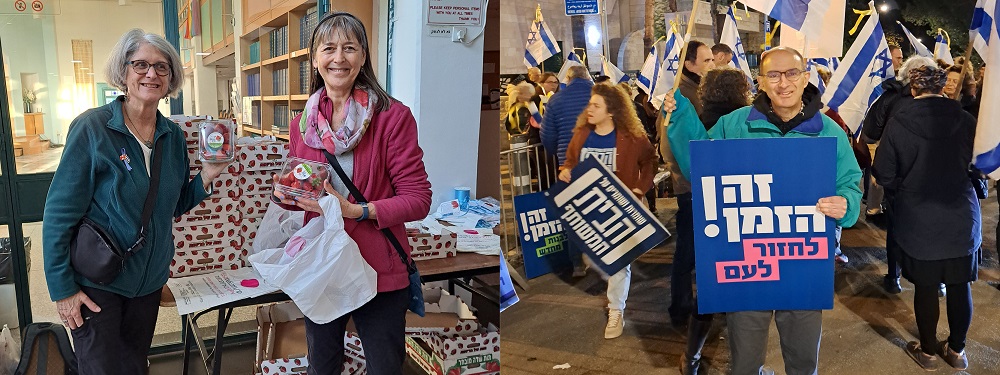
By Jeff & Phyllis Denaburg
After having to cancel a trip to Israel in November, Phyllis and I went last week.
Our main reason for going was to visit family. But we were quickly swept up in the emotional atmosphere. On the surface, life in Jerusalem seems to go on as normal. But just below the surface, the trauma of Oct. 7 is still acute. The desire for the return of hostages is seen and felt everywhere.
It’s inspiring how Israelis have channelled anxiety into a civilian mobilization to help the families of soldiers, the evacuees from towns and kibbutzim in the north and south, and others in need. Phyllis and I participated as much as we could. While Phyllis was helping fellow Reform congregation Kol HaNeshama to sell strawberries they picked at a farm near Netanya, I was packing boxes of food for needy families. I also spent a day working on a farm near Ashkelon.
Israelis are also out on the street demonstrating, mainly on behalf of the hostages, but with political themes creeping back in. While the biggest rallies are in Tel Aviv, we attended two rallies in Jerusalem.
It’s also great to spend time with our Reform brothers and sisters. In addition to Shabbat service at Kol HaNeshama, we attended a Reform movement Havdalah. Everywhere we went, people thanked us when they learned we were visiting from Canada.
Although we were only in Israel for a week, we were caught up in its energy and found it a fulfilling and exhilarating experience.
Every once in a while, we archivists come across something that strikes a chord within us because of the current state of the Jewish world. Today, sadly, we are witnessing a resurgence of antisemitism in a raw and blatant form.
In 1935, Rabbi Maurice Eisendrath (our rabbi from 1929 to 1943) visited Germany and Palestine. Returning to North America, he landed in New York and was interviewed by a journalist. The report of that interview, published in The Reform Advocate, a Chicago Jewish periodical, and elsewhere, is our first record of Rabbi Eisendrath’s observations. Rabbi Eisendrath had visited Germany in 1933 and found the Jewish population “completely terrorized,” but now circumstances had become even worse.
“I saw evidences,” [Rabbi Eisendrath said,] “of new violence in the shattered name plates of Jews in front of several buildings. Then too, I saw the lorries filled with Brown Shirts on Kurfurstendam stopping in front of the various cafes, shouting ‘Jude Verrecke,’ and heard inflammatory speeches denouncing Jews who have the temerity to visit the cafes. On the whole, Jews do not frequent these cafes. These lorries had posters on them with slogans condemning both Catholics and Jews.”
“The passerby cannot, of course, glimpse the horror of the actual daily existence of the German Jews—the constant fear, the communication by whispers behind bolted doors and barricaded windows . To get below the surface, I spoke to a number of Jews and non-Jews. The situation, as everyone put it, is most heartbreaking and utterly hopeless. I spoke with a Jew from rural Germany who had come to Berlin. Not a customer had been permitted to enter his store for three weeks. Storm-troopers stood guard outside his doors to prevent anyone from entering. A recent development is not merely to refuse to buy from Jews, but to refuse to sell anything to them as well—not even the provisions needed for sustenance. Life is absolutely impossible for them in the small towns. In 1933 they were able to seek refuge in Berlin, but today their oppressors drive them from Berlin.”
In Palestine, Rabbi Eisendrath said, he had spoken to hundreds of young Germans who were exuberant and joyful over their escape from Germany. Magnificent work, he said, has been done in providing habitation for these refugees and some of the finest buildings he saw in most of the colonies were built with relief funds. The German Jewish youth, he added, are unanimous in their desire to rebuild their lives in Palestine, and in addition to the young people, erstwhile professional men and business men have been so completely affected by what has happened, that they want nothing more than to make a complete break from everything that is German—land, language, culture, and to reshape their lives in Palestine.
“I would like to add my personal testimony,” he said, “to the imperative necessity for continued relief in Germany. The people are starving. The only possible escape for the youth is by training them for admission to some other country. We must provide funds to give them the chance to escape.”
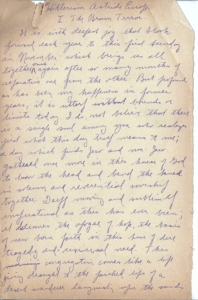
Once back in Toronto, Rabbi Eisendrath made it his task to tell audiences, Jewish and non-Jewish, of the horrors being endured by Jews in Germany and the urgent need to assist Jewish refugees in Palestine. A page from a manuscript of one of his addresses accompanies this article.
An early and acute observer of the situation in Germany, Rabbi Eisendrath’s experiences led him to reevaluate his opinions on pacifism and Zionism; something we will write more about in future articles in these pages.
Michael Cole and Howard Roger
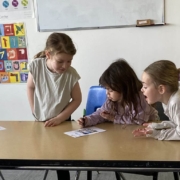
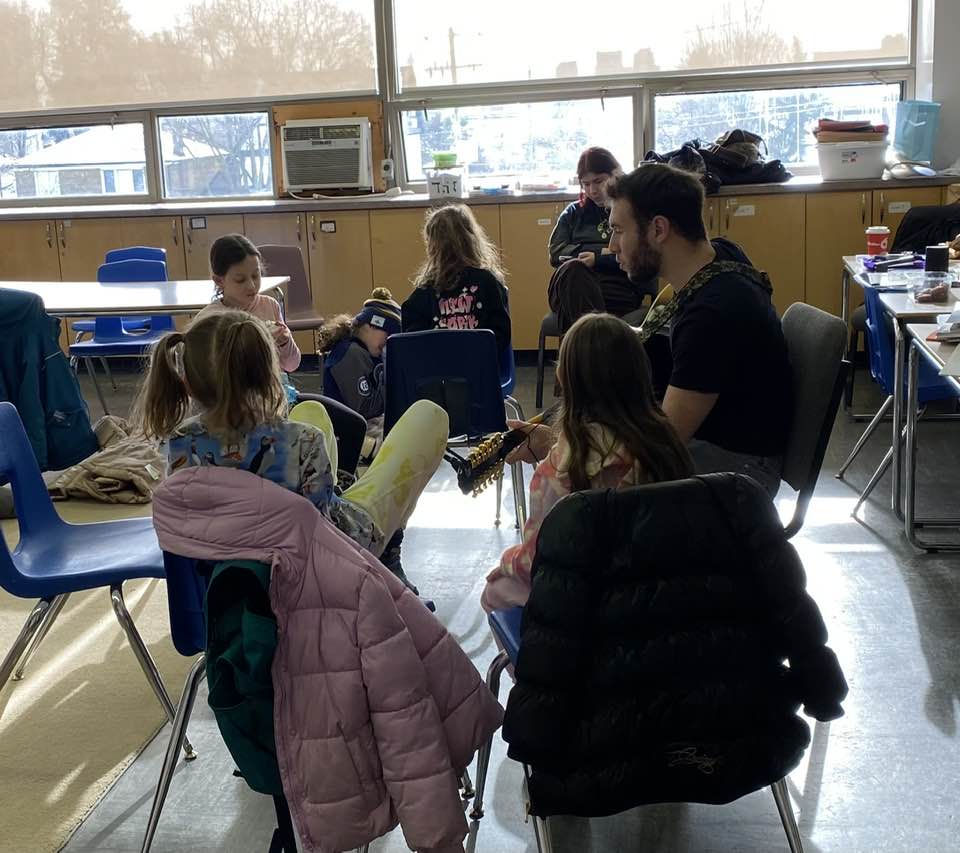
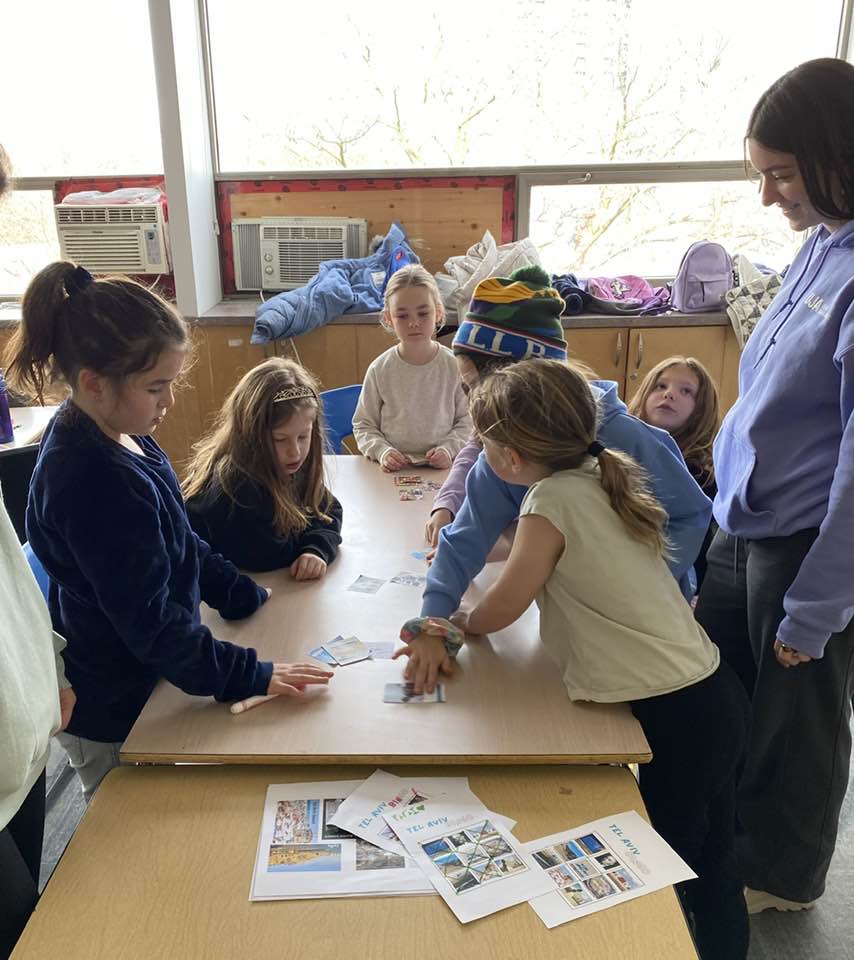
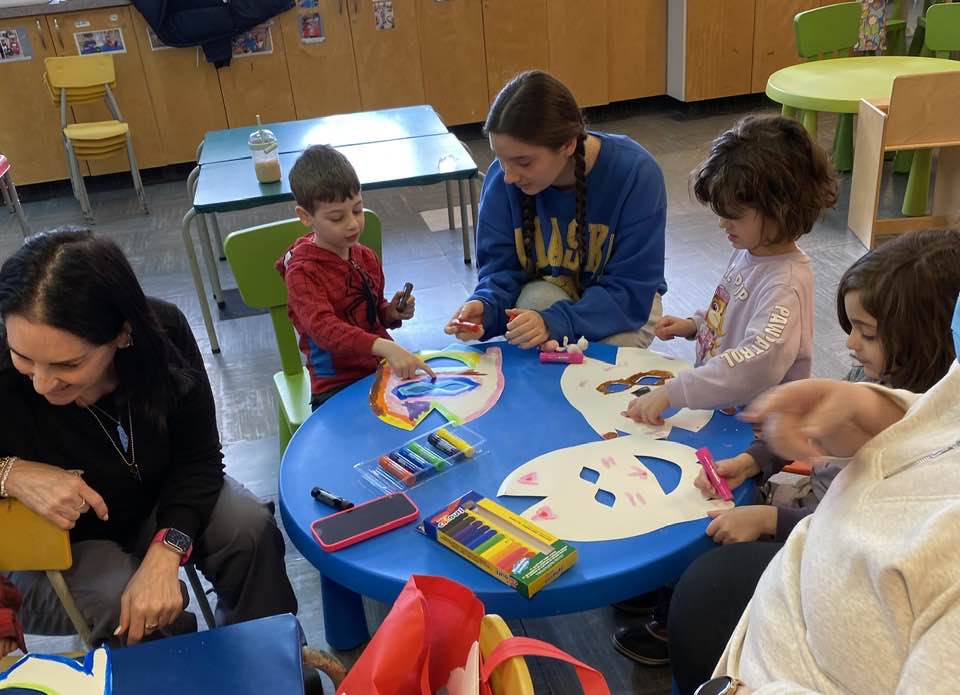
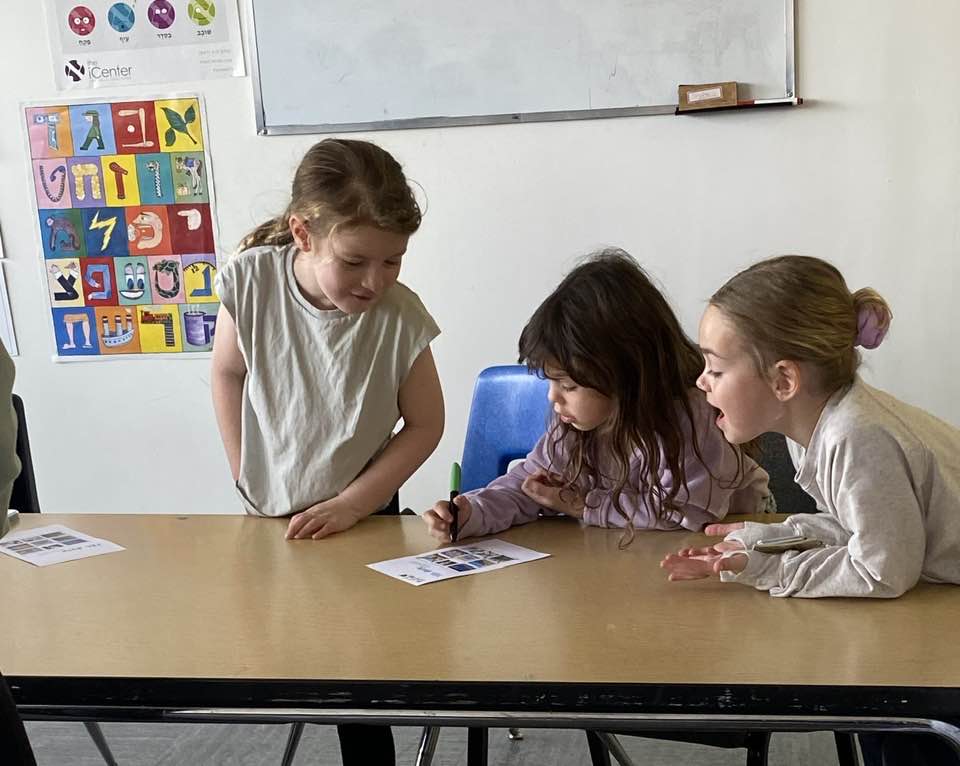
Holy Blossom Temple’s Youth Education Centre welcomed students back this past week after Winter Break. Sunday morning teachers and madrichim were eager to connect with their students and get back into the fun and buy learning routines of Sunday mornings in the YEC!
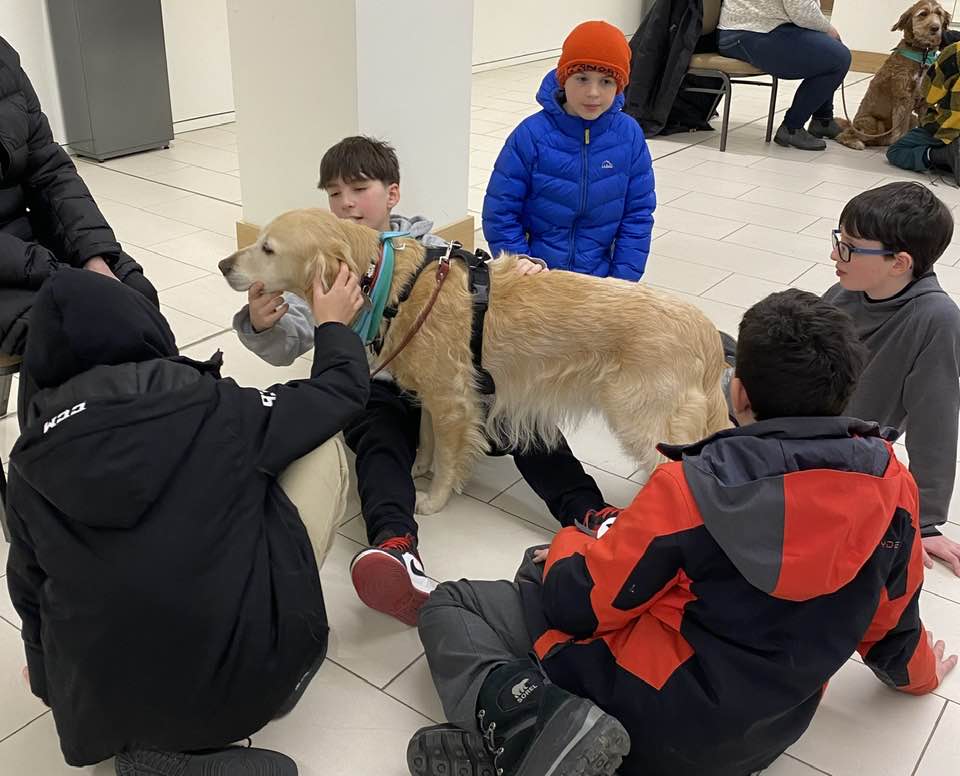
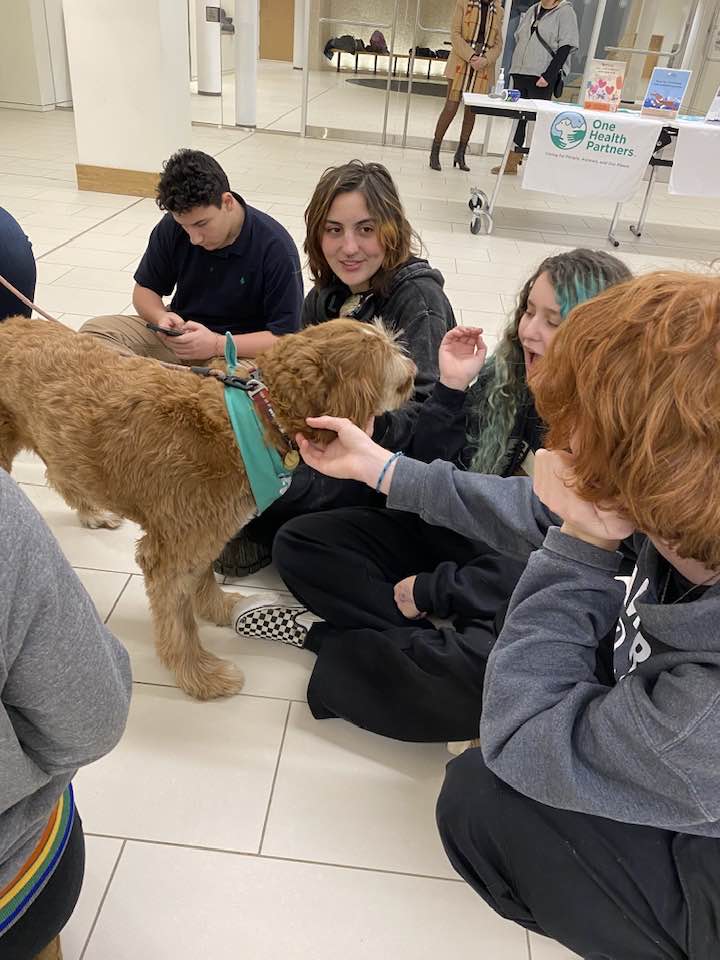
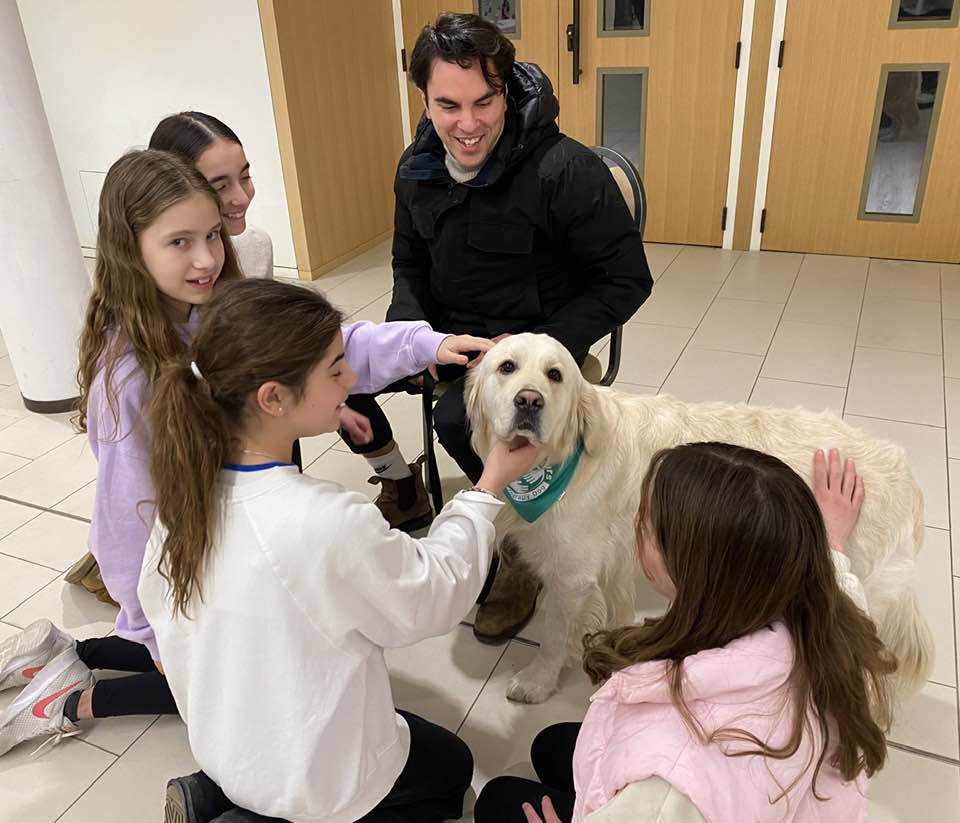
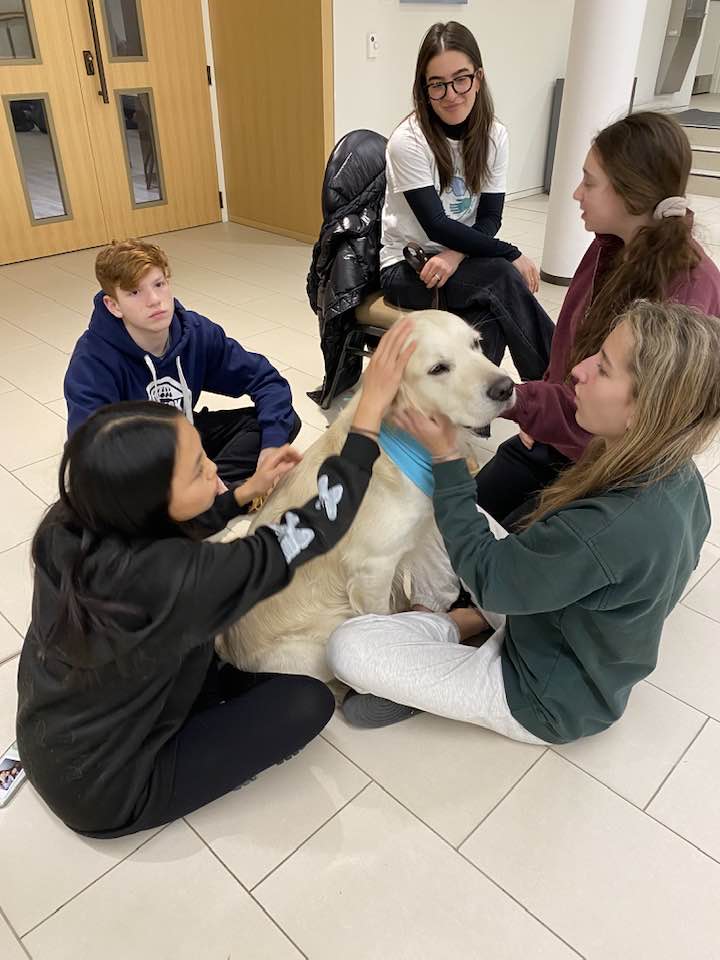
Monday evening we had a special program with therapy dogs from One Health Partners, who came to interact with all our older students, creating an opportunity for reflection and community wellness – a wonderful way to start a semester of learning together!
Have a look below at scenes from Sunday and Monday!
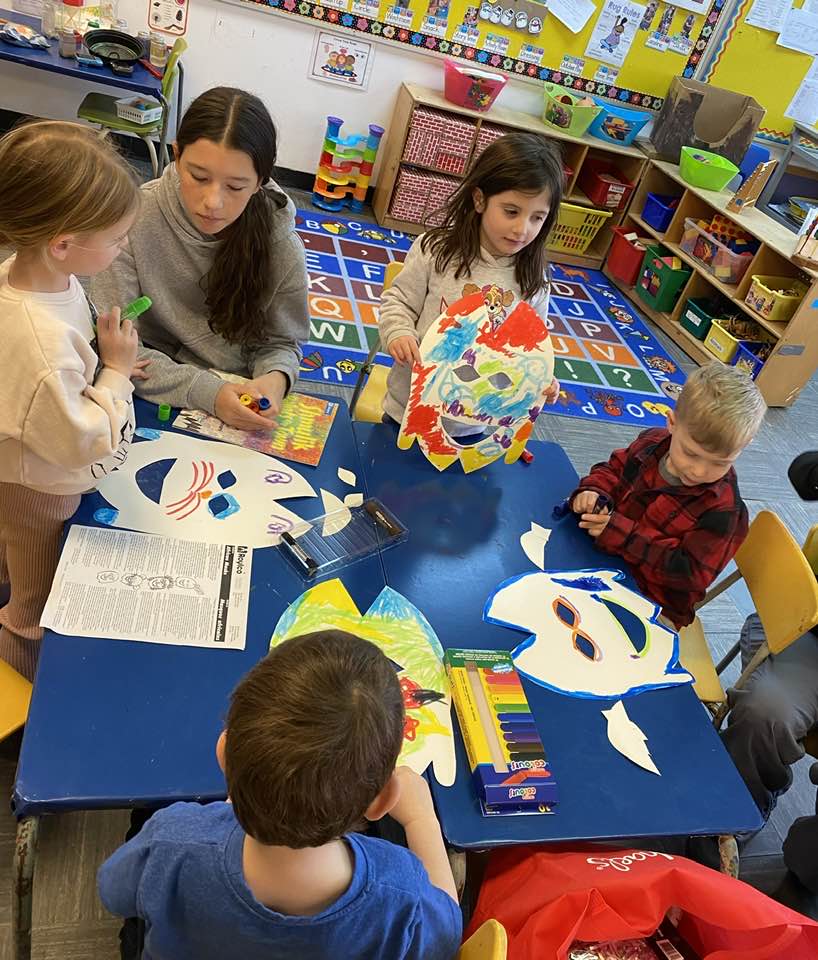
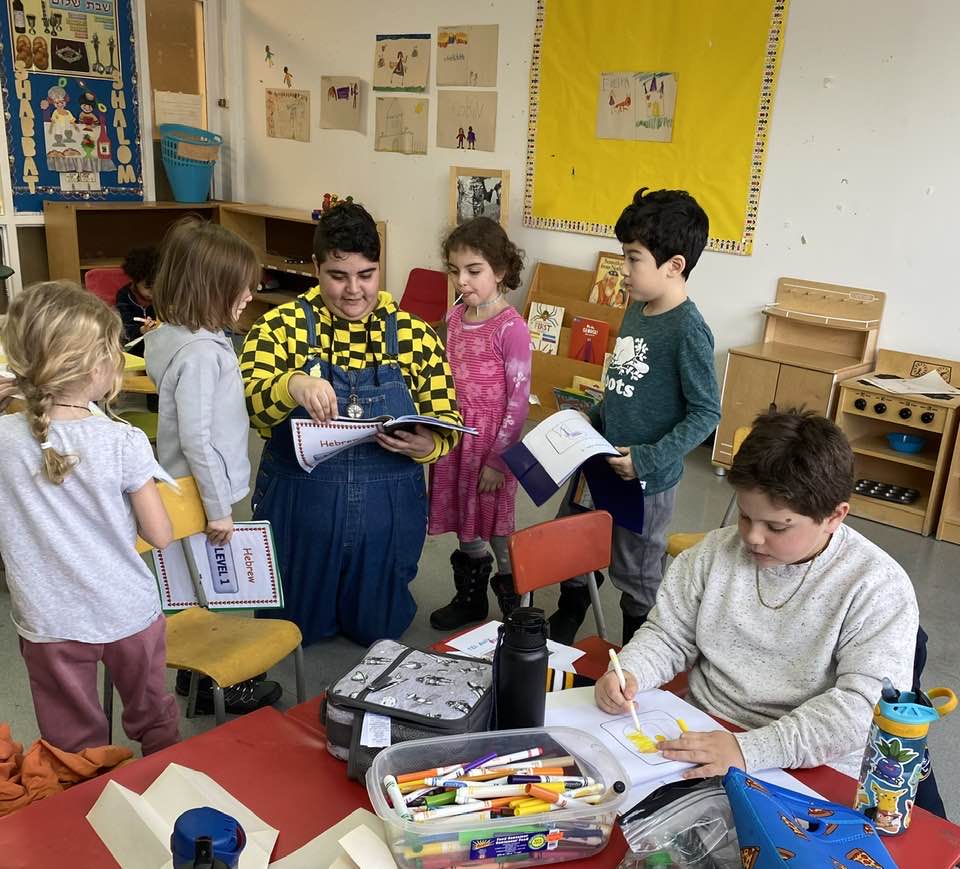
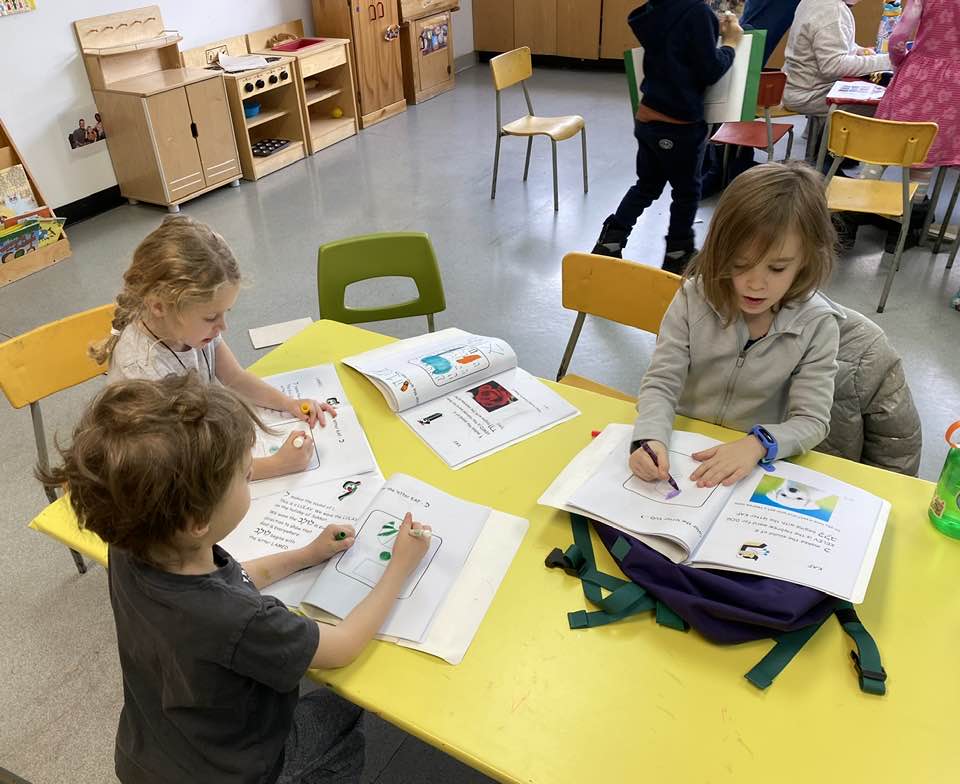
If you or someone you know is looking for Jewish Education for your child/ren, there are still spots available in all our classes, and we welcome new students to join the YEC mid-year! Contact Lisa Isen Baumal [email protected], or visit the YEC page on our website to learn more: Youth Education Centre – Holy Blossom Temple
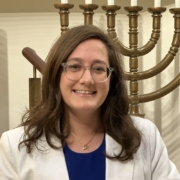
Dear Holy Blossom Temple,
I write to you in transit on my way home after spending a much-needed few weeks visiting my family in Australia.
It gave me a chance to reset and reflect on how fortunate I am to have a community I love to come back to, after the chance to relax with the people I love most.
Turning back to work and this new year, our Torah too has entered a new phase, with Aaron and Moses confronting the Pharaoh in this week’s parashah, Vaera, to, as the famous phrase says, “let our people go”, following God’s promise that the People of Israel will subsequently be returned to their homeland, the one that the Divine swore to their ancestors.
This confrontation marks the beginning of the many events to follow, from the Ten Plagues to the crossing of the Red Sea to the eventual reception of the Ten Commandments. One thing leads to another, and, with a combination of miracle, might, and marvel, our nation is born, one in which each of us is necessary and needed to make Jewish life happen joyfully in our own time.
As we enter our own new phase of the calendar cycle, I wanted to highlight two upcoming opportunities for us to come together in community as we celebrate our 2024 iteration of Jewish peoplehood and culture.
The first is this Shabbat morning, Saturday 13 January, is a Family Service. It is the perfect chance to bring the whole crew along for an informal and inviting atmosphere in the Youth Chapel where we celebrate Shabbat in song and community.
The next is on Tuesday, January 30, at 11:30 am for our Wisdom Generation, where I will present an “armchair travel” experience to my home country following my recent visit, focusing on the Australian Jewish community and a few pieces of advice from the different generations of my own family. The hope is to bring a bit of the warm summer Down Under to our Canadian winter! You can find out more and register here.
Truly, the start of 2024 is shaping up to be a beautiful mix of home (Toronto), homeland (Israel), and hometown (Sydney, Australia) – and we look forward to welcoming you to any or all of these opportunities opening up before us!
L’shalom,
Rabbi McCarroll
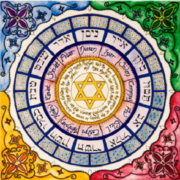
Shevat is the 11th month on the Jewish calendar counting from Nissan. The zodiac sign is Aquarius and its symbol the “waterbearer” makes us reflect on the Biblical verse, “Water will flow from his wells” because it alludes figuratively speaking as the ability in each one of us ‘to pour’ knowledge and inspire/lead others, just as a Tzadik would in order to bring them closer to G/d. Shevat is a special acrostic for “we should hear good news’ it’s a month of good news, Shenishma Besurot Tovot, that we should be blessed to share good tidings.
The notorious celebration during this month is the holiday of Tu B’Shvat on the 15 Shevat (January 25) which is the “New Year for Trees.” In Israel, it is the start of a new growing season and the day that is marked by eating fruits, particularly those from the “Seven Kinds” with which Israel is blessed with wheat, barley, grapes, figs, pomegranates, olives and dates. We reflect on the metaphor “Man is a tree of the field.” Just as the Torah is considered a Tree of Life we notice that both, Torah and Mankind, possess the same components; roots, trunk, branches and fruit.
There are two tribes on this month. The tribe of Asher and his name means pleasure and happiness. The special tree that Asher personifies is the olive tree, which gives the goodly oil with which Asher’s portion in the land of Israel was blessed with. The Tribe of Joseph is connected to Asher’s because it was Asher’s daughter who gave the news to Jacob that Joseph was alive.
The letter: Tzade צ (resembles a tree). Interestingly, the letter of the previous month, Tevet, is ayin (ע), which means “an eye” and when the ayin of Tevet is lifted up to connect with the tzadik of Shevat, the word “tree” (עֵץ) is formed.
The limb is the stomach and the attribute is Taste, which figuratively through the stomach we digest and derive pleasure by internalizing the words of Torah.
The permutation of the month is: Hey, Yud, Vav Hei, found in the pasuk; Vaykra 27 verse 33
לֹ֧א יְבַקֵּ֛ר בֵּֽין־ט֥וֹב לָרַ֖ע וְלֹ֣א יְמִירֶ֑נּוּ וְאִם־הָמֵ֣ר יְמִירֶ֔נּוּ וְהָֽיָה־ה֧וּא וּתְמוּרָת֛וֹ יִֽהְיֶה־קֹּ֖דֶשׁ לֹ֥א יִגָּאֵֽל׃
“If you offer a substitute” In the end, both are holy. Meaning that it is our duty to always improve in what we offer.
The Midrash explains that Moses spent the last month of his life, the month of Shevat translating the entire Torah into the 70 major languages then spoken. This is a fundamental lesson as every Jew has a connection to the Torah, even one who cannot read it in its original tongue.
Under the current circumstances, we hang on to the ‘good news month’ and hope that the future will be filled with joy, blessings of abundance in our lives, of new life, goodness and kindness improving in each and every one of us. Ken Yehi Ratzon.
by Teresa Quiroz, on behalf of Women of Holy Blossom
Shacharit Service: Thursday, January 11, 2024, 7:30 am ET, in-person or via Zoom at https://zoom.us/j/93902401402?pwd=dGlOR2dEcGs1RVc0OVFwdkFtOVo5UT09
Password: 667580
For other upcoming dates and why Rosh Chodesh is special for women see https://holyblossom.org/rosh-chodesh/

1950 Bathurst Street, Toronto, ON, M5P 3K9
(416) 789-3291
[email protected]
Emergency Funeral Contact
Cell: 416-565-7561

Founded in 1856, Holy Blossom Temple is Toronto’s first synagogue with a rich history of tradition and modernity in our religious and spiritual expression.