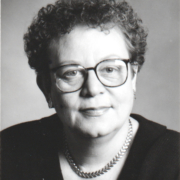

Women of Valour Series: Honouring Caroline Ingvaldsen
Rosh Chodesh Cheshvan: Marcheshvan
Zodiac Sign: Scorpio
Rosh Chodesh Cheshvan welcomes us into the second month of the Jewish calendar, counting from Rosh Hashanah, and the eighth month when counted from Nisan. Cheshvan is unique among the Jewish months. Unlike the festive months that surround it, Cheshvan has no holidays or special mitzvot of its own. After the spiritual richness of Tishrei—with Rosh Hashanah, Yom Kippur, Sukkot, and Simchat Torah—we suddenly enter a quieter season.
Which is it—Cheshvan or Marcheshvan? The fuller traditional name is Mar-Cheshvan (מַרְחֶשְׁוָן). One explanation connects mar (מַר) with the Hebrew word for “bitter,” reflecting the absence of holidays in this month following the abundance of Tishrei. Yet there is also a more uplifting interpretation: mar (מַר) can refer to a drop of water, as in the biblical expression, “like a drop from a bucket.” This is particularly meaningful because Cheshvan is closely associated with rain and water, the precious gifts upon which all life depends. In the Land of Israel, the seventh of Cheshvan traditionally marks the beginning of the request for rain in the daily prayers:
וְתֵן טַל וּמָטָר לִבְרָכָה
“Grant dew and rain for blessing.”
The Mishna explains that this prayer begins on the seventh of Cheshvan in the Land of Israel, allowing pilgrims returning from Jerusalem after Sukkot time to reach home before the rains began. There is something deeply beautiful in this. We move from the spiritual abundance of Tishrei into a month that reminds us of the most basic blessing of all: water. Rain may seem ordinary, yet without it there can be no growth, harvest, or life.
Cheshvan is also traditionally associated with the ancient name Bul (בּוּל), connected with Mabul (מַבּוּל), the Flood in the days of Noah. Thus, even the name of the month evokes the powerful and life-giving force of water.
From Celebration to Reflection: Perhaps the greatest lesson of Cheshvan lies in what happens after the holidays. Tishrei fills us with prayer, celebration, community, reflection, and spiritual renewal. Then Cheshvan arrives, and the excitement subsides. We return to work, family responsibilities, routines, and the ordinary rhythm of life. Cheshvan may feel like an anticlimax, but perhaps it is better understood as an opportunity for integration.
During Tishrei, we gathered spiritual treasures. In Cheshvan, we are asked to bring those treasures home. It is easy to feel inspired while surrounded by prayer and community. The greater challenge is to carry that inspiration into our everyday lives—in our homes, workplaces, relationships, and interactions with others.
Cheshvan reminds us that holiness does not belong only to the holidays. The ordinary days of the year are where our values are truly lived.
This quiet month invites us to reflect on what we gained during Tishrei and consider what we want to carry forward. How can we bring greater kindness, gratitude, purpose, and holiness into our daily lives?
Perhaps Cheshvan is a time to recharge the soul while learning to live our spirituality in the real world.
As the days grow shorter and colder, may Cheshvan give us the strength to carry the warmth of Tishrei with us. The transition from holiday to workday is not a departure from holiness, but an invitation to discover holiness within the everyday.
May this Cheshvan bring us rain in its proper time, renewal to our spirits, and the wisdom to transform the inspiration of our holy days into meaningful action throughout the year.
Chodesh Tov! חודש טוב!
Caroline Ingvaldsen: Cheshvan’s Woman of Valour
By Denise Gordon-Chow
Caroline Ingvaldsen is a librarian’s librarian: warm, smart, menschy, and brilliantly organized. Since her retirement from a 50-year career with the Toronto Public Library as a Branch Head and Children’s Librarian, Caroline now generously provides service leadership at Holy Blossom Temple in a multitude of ways: as Temple Librarian, as the Recording Secretary for Women of Holy Blossom Temple, as a representative on the Temple Board, as the Moderator of Temple Singers, and as the Convenor of the Temple’s Book Club.
As a self-described “book Bubbie” and “connector”, Caroline, grandmother of two, is passionate about the printed word, oral language, and the need to transmit who we are, as Jews, through story. “We are a story,” according to Caroline. She makes it her business that the children in the HBT Early Childhood Education and the Cotler School programs know this too. Caroline has lively weekly Jewish story time sessions with the kids, rain or shine —with or without her walking cane—and the kids are in her thrall!
As Holy Blossom’s Librarian, Caroline is insistent that the library functions as a place of gathering and as a place of learning, a quasi-“Tent of Meeting”. Caroline has gathered a cadre of loyal volunteers to help her organize and curate the collection. She is a staunch advocate for lifelong learning and feels, as People of the Book, that we must nurture a love of reading and the sharing of Jewish stories amongst the young and the young at heart. Caroline achieves this goal with grace and with charm.
Caroline’s participation at Holy Blossom began some years ago through Friday night Kabbalat Shabbat services. The beautiful music drew her in. Encouraged by Nadja Adler, our former piano accompanist, Caroline joined Temple Singers; she soon began to participate in Saturday morning services where she started to pray through song. This was followed by further Jewish investigations, including active membership and participation in our Women of Holy Blossom and its Leadership Council. Finally, in short order, Caroline decided to study toward an adult bat mitzvah; two years later she was proudly called to chant Torah with friends, family and Temple community cheering her on. Her active participation in Temple life has blossomed ever since!
Caroline Ingvaldsen brings veracity to the phrase (Proverbs 31:10): Eshet chayil mi yimtza, v’rachik mip’ninim michrah. A woman of valour, who can find? Her worth is far beyond rubies. Caroline’s contributions to the lifeblood at Holy Blossom Temple are precious and beyond measure; she is a delight, and we are all richer for it. For all this, Caroline, we say, thank-you and may you continue to go from strength to strength.Todah Rabbah and Yasher Yoach!
Caroline Ingvaldsen will be honoured as Cheshvan’s Woman of Valour on Sunday October 11, 2026, at 9:00 am, Holy Blossom Temple
The Women of Valour Series is generously sponsored by Robert Lantos in memory of his mother Agnes Lantos z”l

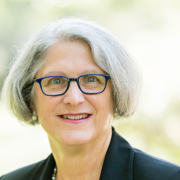


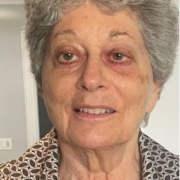

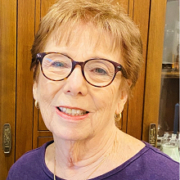 It’s no coincidence that Bambi Katz was born the same year that Disney released its beloved animated film by the same name. Her older sister gave her the nickname “Bambi,” and it stuck!