HERZL. HOPE. HOME.
A new exhibit in the Living Museum from December 2025 to February 2026, showcasing items from David Matlow’s Herzl Collection.
The Living Museum is dedicated by George and Susan Cohen
I am honoured to have the opportunity to exhibit artifacts from my personal collection of Theodor Herzl memorabilia at Holy Blossom. This is my second attempt at doing so. An exhibit was planned for the Temple for the spring of 2020, which was cancelled because of COVID. A lot has changed since then, but the importance of Herzl has not.
It is critical that the world be reminded (and that we remind ourselves) of who Herzl was and what the Jewish State of his dreams was envisioned to be. He inspired us to remember that we don’t have to be saddled with the world as it is right now, that we can improve our situation to fashion a brighter future. This was a possibility Jews of the late 1800s and early 1900s didn’t envision. It may be that some Jews today don’t envision a brighter future either.
On six shelves in the two glass cabinets of the Living Museum, I could not tell Herzl’s entire story. One year ago, I was privileged to have a large exhibit of my collection at Temple Emanu-El in New York. You can enjoy a virtual 3D walk-through of that exhibit here: https://barhama.com/allaboutherzl/tour/. There you will see the full scope of Herzl’s life’s work illustrated by items in my collection.
For the Living Museum, I curated an entirely different exhibit which focuses on two major Herzl themes which are critically relevant today. They are Hope and Home.
Herzl gave the Jewish people hope. He presented us with a new preposterous idea: that the Jewish people have the right to live safely and freely, just like other people. Zionism is as simple as that. Imagine the spark that that idea lit? I picture Anatevka in Fiddler on the Roof and what it would have felt like to the people of this shtetl when they first heard of Herzl in 1896, and learned of his idea that Jews do not need to live in fear of their neighbours. You might picture the town your parents, grandparents or great grandparents came from, and what their reaction might have been.
And where did Herzl think that the Jews could live safely and freely? In our own home, more specifically in the Jewish people’s ancestral homeland, the Land of Israel (then called Palestine, a part of the Ottoman Empire).
The idea of home is integral to Herzl’s vision. At the First Zionist Congress held in Basel in 1897, which he convened, the goal of the newly created Zionist movement was to establish a home for the Jewish people. In the Balfour Declaration of 1917, the British government declared its support for the establishment of a “national home for the Jewish people.” Israel’s 1948 Declaration of Independence includes the term home eight times.
After October 7, 2023, what were we all protesting for? That the hostages be brought home. Our sense of home, both in Canada and in Israe,l has been rocked by the Hamas terrorist attacks and the more than two years of events that followed. Herzl teaches us that we are entitled to a home to go back to, and that we can never give up our hope for it.
Hope and home intersect when you start building that home without the certainty that your hope will be realized. That is what the Jewish people did. Between Herzl’s time (he lived from 1860 to 1904) and Israel’s proclamation into being in 1948, the Jewish people invested greatly in the Land of Israel through donations and capital injections, and through planting trees and financial instruments. Spending money is a sign of optimism. The Jewish people don’t have hope; they make it.
The exhibit features many items that illustrate this theme, including this one from Canada from 1907:

It is a label which reflects a ten-cent instalment payment towards the purchase of one share of the Jewish Colonial Trust (which was founded by Herzl in 1899 as a Zionist investment bank to fund land purchases and development activities, including the purchase of the land that became Tel Aviv). Fifty-five labels (totalling $5.50, which is the equivalent of $190 today) entitled the holder to one share. It was a significant investment in a big dream. My great-grandparents bought shares. Yours may have too.
Herzl wrote frequently about the importance of planting trees in what he called, in his 1902 book of the same name, the Old New Land. At the Fifth Zionist Congress held in Basel in 1901, the Jewish National Fund was created. It purchased land, reclaimed swamps and planted trees, preparing the home for the country to be. When Israel was proclaimed in 1948, 233 of the 305 communities in the new state were on land purchased by the JNF. Israel is the only country in the world to have more trees at the end of the 20th century than it did at the beginning.
Given Herzl’s deep understanding of the importance of planting trees in preparing the home, and his role in inspiring the creation of the JNF, he is often depicted in connection with trees. This is an early 20th-century JNF certificate from Poland confirming the receipt of a donation towards the planting of olive trees in Herzl’s memory. It depicts the cypress tree that Herzl planted in Motza (outside Jerusalem) on his one visit to Palestine in 1898 (Herzl never stood beside the tree when it was at this height- the image is an early example of Photoshop). The Turks cut down the tree during World War I, but children collected the cones and planted the seeds in them throughout the land, from which new trees grew. The exhibit includes many other items relating to the planting of trees, which will be especially meaningful around Tu Bishvat (the New Year to the Trees), which starts at sundown on February 1, 2026.

The idea of hope is so ingrained in Herzl’s idea that the national anthem of the country he envisioned is literally “The Hope” (Hatikvah). The exhibit includes a number of items relating to the Hatikvah (which may have increased significance on Shabbat Shira, the Shabbat of Singing, which begins at sundown on January 31, 2026). This is one of my favourites from 100 years ago:

Here the Hope is looking forward to a bright future in a newly built, heavily forested land of Zion that sits under a gleaming sun.
The artifacts in the exhibit have been specifically selected out of my collection of over 6,000 items with the hope (there it is again!) that it reminds us that we have been through difficult times before, we will get through these difficult times, and that together we can make tomorrow better. Herzl teaches us this, and my hope (!) is that the exhibit serves as a tangible reminder of this possibility, and I dare say, necessity.
If you would like to know more about Herzl and my collection, please check out my website: https://herzlcollection.com/. I also write a weekly column for the Canadian Jewish News (www.thecjn.ca) called Treasure Trove, where I take one item from my broader Zionism collection and write about it. You can find all of the more than 200 past columns here: https://herzlcollection.com/treasure-trove
I hope you enjoy the exhibit. Please feel free to reach out to me at any time with any questions about it ([email protected]).
David Matlow
Herzl. Hope. Home. is a program of The Herzl Project

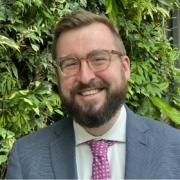
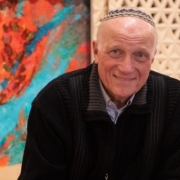


 Dr. Cochav Elkayam-Levy, a legal scholar and human rights advocate, is the founder and chair of the Civil Commission on October 7th Crimes by Hamas against Women and Children (CC07). The Civil Commission she established has led a global campaign for the recognition of gender-based violence and other atrocities of October 7th. The Commission is building an archive to document these crimes, giving a voice to the victims and raising awareness of war crimes committed against women, children and families. On November 25, 2025, the commencement of the 16 Days of Activism against Gender-Based Violence, the Civil Commission will release their report entitled: Sexual Terror Weaponized – Conflict Related Sexual Violence and the Atrocities of October 7. Findings and Legal Analysis of Gender-Based Crimes Committed During the October 7 Attacks.
 Dr.Guila Benchimol is a criminologist, consultant, educator, and victim advocate who works with survivors, faith institutions, and leaders to prevent and address sexual violence and other abuses of power. She has been the Senior Advisor on Research and Learning at the SRE Network (Safety, Respect, and Equity) since she helped guide its launch in 2018. Guila is also the Director of Faith-Based and Community Accountability at Ampersands Restorative Justice and the Ethics Case Consultant for the Va’ad Hakavod of the Rabbinical Assembly. Guila holds a PhD in Sociological Criminology from the University of Guelph and is a trained restorative and transformative justice facilitator.
 Dahlia Lithwick is a regular contributing analyst at MSNBC and senior editor at Slate Magazine. Her work has appeared in the New York Times, Harper’s, The New Yorker, The Washington Post, The New Republic, and Commentary. She is host of Amicus, Slate’s award-winning biweekly podcast about the law and the U.S. Supreme Court. Her recent book, Lady Justice (September 2022), became an instant NY Times Bestseller. Dahlia earned her BA in English from Yale University and her JD degree from Stanford University, and has held visiting faculty positions at the University of Georgia Law School, the University of Virginia School of Law, and the Hebrew University Law School in Jerusalem. Dahlia is part of the international team of legal experts seeking justice for the victims of sexual violence on October 7.





 Dear Holy Blossom,

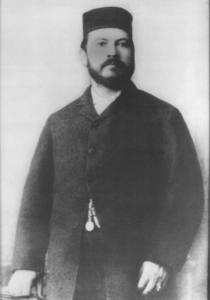 In the early years of Holy Blossom’s existence, we didn’t have a rabbi. Founded in 1856, we didn’t engage a rabbi until 1890. We did, however, need someone who could read from the Torah, slaughter chickens, teach children, and circumcise baby boys. Needless to say, finding one person who could fill the duties of ba’al koreh, shoichet, melamud, and mohel was not easy. Indeed, several candidates were tried and found wanting in at least one of these tasks and dismissed.
 This past September, we were approached by Mr. Robinson’s great-great-grandson, David Robinson, who asked to visit Nathan’s burial site, and on Monday, September 29, we accompanied David and three of his cousins to Pape Avenue. David told us that Nathan’s son moved to Winnipeg, and David lives there still. David has taken a great interest in his ancestry, and we were happy to provide him with information on Nathan’s part in Holy Blossom’s history and to lead him to his ancestor’s final resting place.