

Aichah. How?!
This stunned and beleaguered phrase is how one begins the book of Lamentations, the text read by Jews across the world tonight and tomorrow. At sundown, Tisha B’Av begins, the 9th day of the month of Av, Judaism’s ‘worst day of the year.’
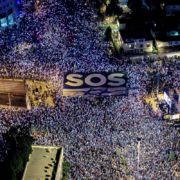
Today, Jews across the world are turning to our beloved Israel and struggling with the passing of the first law in the hotly debated judicial reform. The question is not “How did this happen?” There have been 29 weeks (about 6 and a half months) of protest, debate, readings, deliberations and demonstrations. The ultimate trajectory of this law is not itself a surprise. The great how which is being so painfully debated is “How will our people be whole?”
The Reform Movement of North America, in their statement published Monday, stated “This could have been a moment for Netanyahu to unite the nation and secure Israel’s standing in the world as a strong and leading democracy. Instead, the concerns of the majority of Israelis and Jews across the word… have been ignored.”
Michael Oren, former MK, deputy minister in the Prime Minister’s Office, and Israeli ambassador to the United States of America writes brokenheartedly upon seeing a photo of victorious coalition members celebrating with selfies. “My sole consolation lay in the belief that, at the end of the day, we are all still Israelis, still part of one people with a shared destiny and a memory of our painful past. We all remembered Tisha B’Av. Then came that selfie. Instead of displaying humility…rather than recalling the Jews who killed Jews inside Jerusalem while the Romans surrounded it… the government exulted in victory.”
CIJA tweeted out “We had hoped that all sides could have reached a compromise on this first of several pieces of legislation related to judicial reform. Israeli democracy is strongest when compromise and consensuses bring all segments of society together.”
Meir Ben Shabbat, former head of the national security council, wrote in Israel Hayom, “The dispute…has smashed the brittle shield that until now as always protected the IDF and the security forces, the ultimate symbol of consensus and stronghold of non-partisan impartiality, threatening to crush what is left of the “People’s Army.”
In the Jerusalem Post, the editorial staff noted a rare note of hope, describing protestors and counterdemonstrators passing each other on an escalator “Suddenly, as the two sides headed in different directions, something beautiful happened: people began reaching out across the divider and shaking the hands of those passing on the opposite escalator. It was recognition that no matter what political path they follow, there is still a need for respect and recognition of what we all share. It should not have been such a remarkable sight.”
Though there is much division amongst our people, as we enter this solemn day of fasting there is one common theme. The classic lesson of the Talmud, which teaches us that the Jerusalem was destroyed by internal hatred amongst the Jewish people on Tisha B’Av, is on everyone’s minds.
Aicah? How? How will we avoid the mistakes of the past?
May it be God’s will we find a way. Together.


We are so fortunate to be part of a tradition which places emphasis on the value of wisdom.
As our Psalmist teaches, “from all who have taught me, I have gained understanding” (Psalm 119:99), which indicates to us that that wisdom is both a teaching and a learning process.
We embody this philosophy at Holy Blossom, through our honouring of our Wisdom Generation, as we believe that, particularly in later life stages, we acknowledge all that we have to learn from them, but also recognize that we are each active, thriving, creative lifelong learners at the same time, with much to discover and explore.
Our Rabbis, in Mishna Chagigah, outline their own unique way of discovering and exploring the wisdom of our texts, through their “PaRDeS” method of studying the Pardes, the rich and fruitful orchard, that is Torah.
פ (pey) stands for pshat, the simple interpretation, which indicates the literal meaning of the scriptural text. ר (reish) stands for remez, or hint, connoting that which is gleaned from allusions within the text. ד (daled) equals drash, the exposition, or the homiletic meaning of the text. Finally, ס (samech) is translated to sod, or secret, in which the mystical meaning of the text that leads us to God is illuminated.
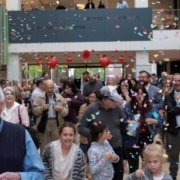
In our valuing of wisdom, and of our Wisdom Generation, we hope that you will join us this Shabbat morning, 15 July, from 10:30 am, as Dorot presents their annual Summer Gathering It is an opportunity for all of us to gather for a special service and enhanced kiddush luncheon, with good food, good music, and, most of all, good company spanning all generations to learn from and be taught in turn. We look forward to welcoming you there!
Please fill out the forms below to complete an individualized plan for a child with medical needs.
Individualized Plan for a Child with Medical Needs

1950 Bathurst Street, Toronto, ON, M5P 3K9
(416) 789-3291
[email protected]
Emergency Funeral Contact
Cell: 416-565-7561

Founded in 1856, Holy Blossom Temple is Toronto’s first synagogue with a rich history of tradition and modernity in our religious and spiritual expression.