
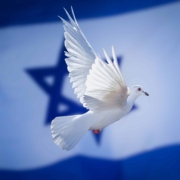
The annual UJA walk with Israel is on May 25th! Last year nearly 50,000 people walked down Bathurst Street to support the Jewish community, stand with our families in Israel, and proudly reject Jew hatred in Canada. You can learn more and register here. Continue to watch this space for mustering information and how you can represent Holy Blossom at this vital event!
The documentary film “October 8” is now playing across Canada. You can get tickets at this link, or at the websites of the various theatres showing the film. October 8 tells the story of the horrifying eruption of hatred and antisemitism which has infected North America in the shadow of October 7th. Whether you are seeing the film in a private showing, or in theatres, we encourage you to bring friends and amplify its message.
As we did last year, during our festival of Pesach, we encourage you to invite a guest to your seder: one of your friends, neighbours, or co-workers who is not Jewish! Opening our homes this Passover is more important than ever. When asked, non-Jews who stand up to antisemitic ideologies overwhelmingly shared that it was their relationships with Jewish friends which motivated their convictions. Let us work together to be part of that story! Chag Sameach!
Learn more about Advocacy@HBT here.
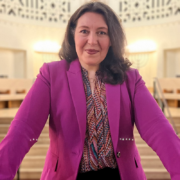
It seems the whole world is protesting. This year’s Pesach, Festival of Freedom, is arriving right on time. The very first Pesach was a kind of protest, too. On that night, our ancestors put the sign of protection on the lintels of their houses. They shared a lamb feast with neighbours and hungry strangers. They “girded their loins” and found courage they didn’t know they had. They “took up a staff in their hands” and reclaimed the dignity others tried to deny them. That night, they chose to take a chance on freedom. They chose to put their faith in one another and in the God who Redeems.
We don’t know what the journey ahead will bring for the Jewish People, for the Jewish State or for Canada. This Pesach comes right on time for us to reflect on how we can protect the many freedoms we cherish and how we can create greater freedom for those who seek it. We hope these resources below will spark meaningful conversation at your seder tables.
From the Israeli Reform Movement
From Mishael and Noam Zion of the Hartman Institute Seder supplement for 2025
download here: https://bit.ly/zionseder2025
Every year, I send you a different Pesach poem, something you might share before lighting the Yom Tov candles. This one is brand new, written by Rabbi Evan Schultz. Enjoy!
It was never about the four children,
but about seeing our children
for exactly who they are.
It was never about the four questions,
but about living with curiosity.
It was never about Dayenu,
but about going to sleep affirming
that today I was and I am enough.
It was never about the matzah,
but about acknowledging
the profound fragility of life.
It was never about the seder plate,
but about recognizing
the symbolism in everyday things.
It was never about the maggid,
but about asking our parents
to teach us their stories.
It was never about the saltwater,
but about giving space for tears.
It was never about the plagues,
but about recognizing where
our broken world needs us most.
It was never about the four cups,
but about embracing life’s joys.
It was never about the seder,
but about seeking a sense
of order in a very chaotic world.
It was never about Elijah,
but about believing that
a better world is still possible.
It was never about the haggadah,
but about tradition telling us
that we each have a story to write.
It was, however, always about
the matzah ball soup.
Erev First Day Pesach Yom Tov Service
Saturday, April 12, 6:00 pm
Learn more & join us
First Day Pesach Yom Tov Service
Sunday, April 13,10:00 am
Guest Rabbi, Felicia Sol, Senior Rabbi of Manhattan’s B’nai Jeshurun, will give the sermon
Learn more & join us
Erev Seventh Day Pesach Yom Tov Service
Friday, April 18, 6:00 pm
Learn more & join us
Seventh Day Pesach Yom Tov and Yizkor (Memorial) Service
Saturday, April 19, 10:00 am
Learn more & join us
Please note that our brief Yizkor (Memorial) Service on Saturday, April 19 at 10:00 am will be especially meaningful for those who are missing dear ones at the seder table. Our next Yizkor Service will be on Shavuot, Monday, June 2 at 10:00 am.
Click here for all of our Pesach 5785 offerings
I hope to see you over the coming days for shared meaning, music, and memory.
Wishing you and those you love a Chag Sameach!
Rabbi Yael Splansky
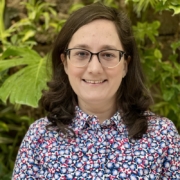
“What could the heart and tongue compose,
or spirit’s strength within me to suit You?”
(Solomon ibn Gabirol, 11th century Spain)
From biblical passages to medieval piyyutim, to modern Israeli ballads, the medium has long been the message as we have continually sought creative ways to express that which we and our ancestors have been unable to convey in conversation alone.
As seen by this short line from the Middle Ages alone, it has been employed to explore the issues most pertinent to our hearts and minds, whether that’s connection to God, our Jewish identity, the human condition, or specific holidays and historical events.
When we welcome in Shabbat, we usher it in first with psalms and then Lecha Dodi, a 16th-century acrostic.
When we elevate our chaggim, including Pesach as it inches closer, we will do so with Hallel, verses of praise to the ultimate Author that express our joy and gratitude at the opportunity to celebrate.
Conversely, just this last week, at our Reform Rabbis of Greater Toronto table, we studied with Israeli colleagues who brought us a number of examples of how their friends and colleagues had processed their grief, shock and trauma through what else, but poetry.
It is with this storied tradition in mind that we encourage you to come and join in, and learn more, as we welcome guest poets Adam Sol, Alisha Kaplan, and Deborah Leipziger in the first Toronto Jewish Poetry Exchange – first with Wine & Cheese before Kabbalat Shabbat, then with Saturday morning Torah study in honour of the decades of Reform Jewish leadership of Carole Sterling and Elliot Jacobson, Saturday evening at the Koffler Centre, and Sunday morning with our Young Families.
“What could the heart and tongue compose …” – we might not be sure just yet, but I’m certainly looking forward to finding out, as we gather in community, in prayer, and in poetry!
Toronto is hosting two extraordinary events: the Auschwitz Exhibit at the ROM and the Nova Music Festival Exhibit. These powerful, thought-provoking exhibits promise to offer visitors a deep, educational experience. The Auschwitz Exhibit provides a poignant look into history, shedding light on the Holocaust’s enduring impact while fostering conversations on remembrance and resilience. The Nova Music Festival Exhibit shows how a festival of laughter and love was turned into a dark and horrible scene as the peaceful gathering was attacked killing 411 attendees and leading to the capture of 43 hostages.
With the federal elections coming on April 28th CJPAC has released a number of resources discussing the best way to support the candidate of your choice. With such a hotly contested election it is of the utmost importance that you participate in any way you can, including by donating, volunteering, and encouraging others to participate!
Antisemitism has risen across Toronto in the past two years (accounting for 55% of all hate crimes last year according to Toronto Police Services). Our legal system has been largely unable to manage this influx of crimes, leading the ALCCA to announce a new task force comprised of lawyers who will focus on ensuring that hate-motivated incidents are properly addressed by the Canadian legal system.
Learn more about Advocacy here.
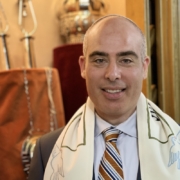
This time of year always feels a bit frantic. With Spring Break and Purim behind us, Daylight Savings making us sluggish, and Pesach fast approaching, it can all feel like a whirlwind.
And yet, one thing we always find time for is Shabbat… ahhh. And with Shabbat, of course, comes a little Torah. Typically, the Torah portions Vayakhel and P’kudei are read together, but due to how the Hebrew calendar worked out this year, these two portions are getting their own “bimah time” spread over two Shabbatot.
Upon deeper reflection, we find a fascinating paradox in these two parshiot that raises some intriguing questions about our roles as members of this kehillah kedoshah (holy congregation).
The word Vayakhel means “assembly” or “community,” while P’kudei comes from the root meaning “to count” or “accounting,” reflecting a focus on itemization and individuality. In essence, these two parshiot express the intersection and tension between the collective and the individual. On one hand, we recognize the importance of community as part of a greater whole— the Reform movement and the greater Jewish world. Yet, as individuals within this community, we also need to honor our unique identities, distinct from others.
Our Chassidic teachers suggest that the close proximity of these two parshiot is no coincidence, especially since they are often read together. They also point out that both Vayakhel and P’kudei are given equal prominence in the Torah. What’s most striking, however, is how the names of the parshiot seem to have swapped places.
As we saw last Shabbat, Vayakhel describes in intricate detail how the Israelites were to assemble the Mishkan. It talks about the hundreds of decorations, foundations, measurements, accessories, and the individual components of the sanctuary. The word Vayakhel itself comes from kahal, meaning congregation, which underscores the importance of the community coming together.
This week, in P’kudei, we find the opposite approach: a summary of all the parts coming together harmoniously to create the sanctuary’s beauty and completeness. And yet, P’kudei—from the root pakod, meaning “to count”—emphasizes analysis, categorization, and specific details.
So why do the names of these two parshiot seem to have been switched? What can we learn from this apparent contradiction?
Before we attempt to explain the swapping of the names, it’s important to acknowledge the value of both concepts individually, as well as the powerful connection that comes from combining them.
Our congregation is unique and special because each of us brings our own experiences, stories, talents, and skills to the table. We look to each other for inspiration, spiritual growth, and a sense of connection. Each of us has something original and valuable to contribute to our community. I am continually inspired by the new ideas brought forth by my colleagues, our staff members, lay leaders, volunteers, and every individual in the congregation who shares their unique gifts.
Rabbi Jonathan Sacks reminds us of a beautiful blessing from the Talmud, to be recited upon seeing 600,000 Jews in one place (a rare and fortunate occurrence!): “Blessed are You, Adonai, Knower of Secrets.” Judaism, he explains, never allows us to lose our individuality in the mass. The Talmud teaches that every person is different, with their own attributes and thoughts. And God, we are taught, relates to us most intimately as individuals, not as part of an indistinguishable crowd.
And yet, our duality reminds us that our uniqueness is amplified by how we support one another. When we open our hearts and minds to collaboration, we unlock the collective potential of our community. Vayakhel/P’kudei teaches us a delicate balance: the work we do as individuals is strengthened when we come together to benefit the entire community.
We must celebrate the uniqueness of those around us. When we learn from others, when we think in terms of collaboration and building upon each other’s triumphs, we have the power to create a sanctuary that is truly sacred. In doing so, we draw closer to each other, to ourselves, and most importantly, to God.
That still leaves us with the question: Why did the names of the parshiot seem to have switched places? We understand the importance of both individualism and collaboration, but why is community prioritized first?
Our sages teach that even when the goal is the realization of individual potential, the optimal way for an individual to actualize their uniqueness is within the context of a community. The Torah, in placing Vayakhel before P’kudei, teaches us that the first step must always be to bring people together, regardless of their individual state. Personal growth and perfection will follow, nurtured by the love and support we offer one another.
In essence, the content of Vayakhel focuses on the individual components, while P’kudei describes how those parts come together to form a greater whole. The Torah tells us that the most perfect community is one that brings together individuals who are fully in touch with their own uniqueness, while also recognizing the importance of working together to create something greater. True community is not just a sum of its parts; it is the beauty that emerges when each part has its opportunity to shine in a supportive environment that is guided by Divine presence.

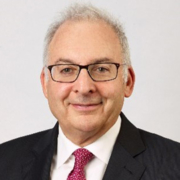
While we were excited to welcome our sitting MP to Holy Blossom for a neighbourhood check-in, the calling of the Federal Election on April 28th requires us to postpone the programme. Holy Blossom is a non-partisan organization holding charitable status. Once the election is complete, we will look forward to inviting our federal representative to join us. To learn more about Elections Canada and how to vote click here.
While there have been well-documented reports of antisemitism in Ontario schools, official government data is needed to further combat Jew hatred in Canada. The Special Envoy on Holocaust Remembrance and Combatting Antisemitism, working with UJA, has opened a vital survey to report incidents of antisemitism in Ontario schools. If you are a parent of a child in an Ontario school, please take part in this confidential and anonymous survey. The survey closes shortly, on March 31st, so please share and fill it out this week!
If you would like to share your experience with the City of Toronto regarding your experiences with protestors in the last several months and years, you can do so here. The City is considering enacting ‘bubble legislation,’ making certain vulnerable locations (such as houses of worship) protected areas where protesters would not be permitted. The survey closes on May 1st.
A CJPAC Election Workshop with CJPAC’s Managing Director, Emile Scheffel, will take place digitally on April 4th. If there is a candidate with positive views on Israel who has inspired you to canvass for them, and you would like to gain or develop those skills, please register here.
Learn more about Advocacy@HBT here.

1950 Bathurst Street, Toronto, ON, M5P 3K9
(416) 789-3291
[email protected]
Emergency Funeral Contact
Cell: 416-565-7561

Founded in 1856, Holy Blossom Temple is Toronto’s first synagogue with a rich history of tradition and modernity in our religious and spiritual expression.